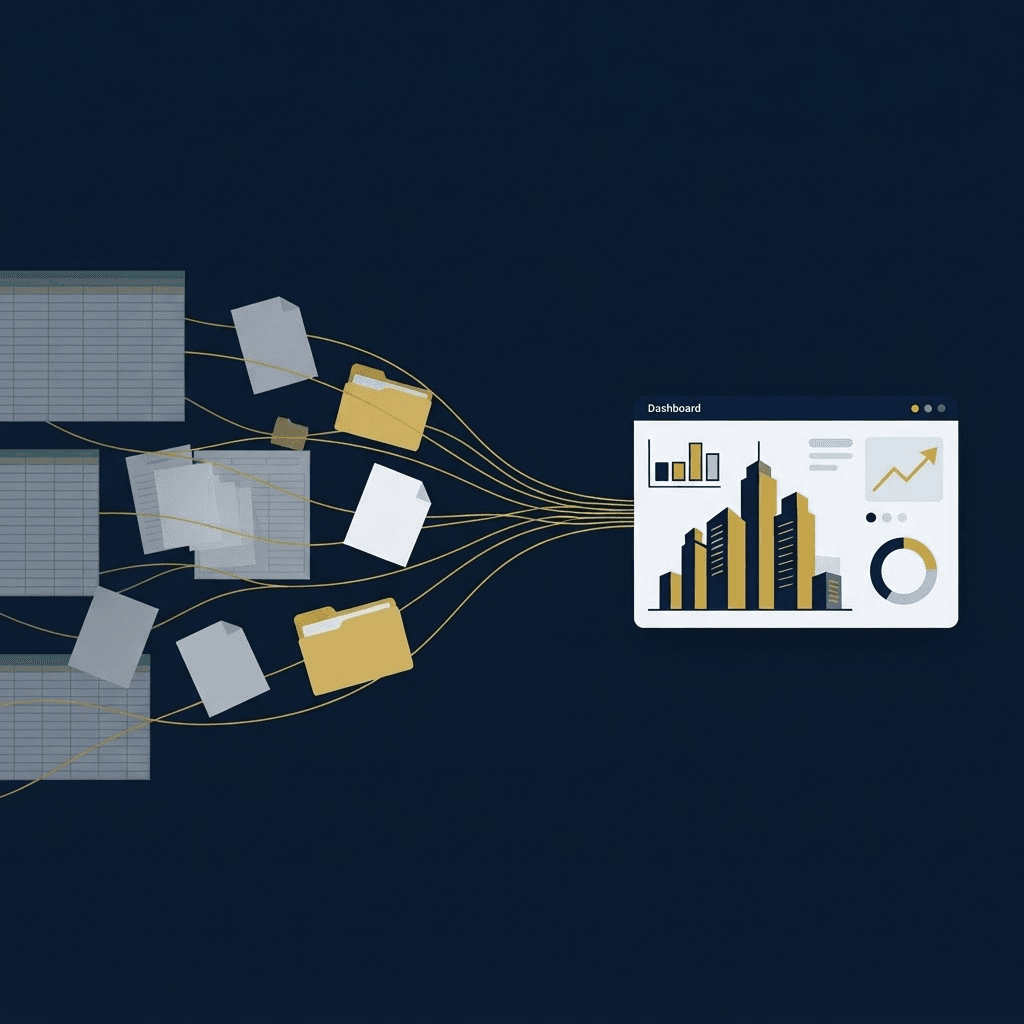
How HABORA prepares your portfolio for environmental certifications
Learn how HABORA organizes data, documents, targets and environmental indicators to prepare real estate portfolios for LEED, AQUA-HQE, EDGE, GRESB and other certifications.
Earning an environmental certification for a real estate development does not begin at the moment of the audit. The process starts much earlier, with the organization of data, the definition of targets, the monitoring of performance and the ability to present reliable evidence about each asset.
Utility bills, emissions inventories, waste reports, environmental policies, permits, technical reports, maintenance plans and operational records must be up to date, linked to the correct property and available for analysis.
In portfolios with dozens or hundreds of assets, handling this control through spreadsheets, isolated folders and scattered documents makes preparation slow, expensive and prone to inconsistencies.
HABORA acts precisely at this stage: it organizes data, documents, indicators, targets and responsibilities to raise the portfolio's level of readiness for environmental assessments and certifications.
Main environmental certifications used in Brazil
It is important to distinguish the certification system from the entity responsible for its application, administration or auditing. Among the references most present in the Brazilian real estate market are:
LEED
LEED — Leadership in Energy and Environmental Design — was developed by the U.S. Green Building Council (USGBC). The technical assessment and certification of projects are administered by Green Business Certification Inc. (GBCI). In Brazil, the Green Building Council Brasil works on the dissemination, training and development of the market related to the system.
LEED has modalities applicable to new construction, interiors, existing buildings, operation and maintenance, among other categories. Its assessment covers themes such as energy, water, materials, waste, location, transportation and indoor environmental quality.
According to the GBC Brasil 2024 Activity Report, the country ranked fifth in the world in projects registered and certified by LEED, demonstrating the relevance of the system in the Brazilian market.
AQUA-HQE
The AQUA-HQE certification originates from the French HQE system and is applied in Brazil exclusively by Fundação Carlos Alberto Vanzolini.
Its requirements were adapted to the Brazilian reality, taking into account climate, technical standards, regulations and local characteristics. The certification can be applied to developments under construction, renovation and operation.
AQUA-HQE assesses themes related to quality of life, respect for the environment, economic performance, management and governance. For buildings in operation, its frameworks cover both the management system and the quality of the building and operational practices.
According to information published by Fundação Vanzolini, by January 2025 approximately 975 buildings and around 20 million square meters had been certified in Brazil.
EDGE
EDGE — Excellence in Design for Greater Efficiencies — is an initiative of the International Finance Corporation (IFC), part of the World Bank Group.
The system is aimed at resource-use efficiency. To obtain EDGE certification, a project must demonstrate, compared with a reference building, the minimum savings established by the system in energy, water and embodied energy (or embodied carbon) of the materials.
EDGE also has a pathway applicable to existing buildings and major renovations. Certification is carried out by authorized independent entities, among them GBCI, Sintali, Bureau Veritas and SGS, according to the market and local availability.
GBC Zero Energy
The GBC Zero Energy certification, promoted by the Green Building Council Brasil, recognizes buildings capable of balancing annual energy consumption with renewable energy generation.
The process requires actual operational data. The certification is valid for 12 months and can be renewed upon new evidence of the energy balance for the previous period.
This model highlights the importance of keeping bills, measurements, generation data and historical records continuously organized.
WELL
The WELL Building Standard is developed by the International WELL Building Institute (IWBI) and has its certification administered by GBCI.
Although not exclusively environmental, WELL is an important reference for developments that wish to demonstrate the performance of the built environment in factors related to health and well-being.
WELL v2 is organized into ten concepts: air, water, nourishment, light, movement, thermal comfort, sound, materials, mind and community. It can therefore complement a broader environmental and ESG strategy.
GRESB: a benchmark for companies, funds and portfolios
GRESB must be treated separately because it is not an environmental certification of buildings.
It is a global ESG performance benchmark aimed, among other participants, at real estate companies, private funds, listed companies, developers and investors.
Its real estate assessment considers corporate information and asset data, including energy, greenhouse gas emissions, water, waste, data coverage, policies, targets, risk management and existing certifications in the portfolio.
For companies that manage several properties, structuring this data can support both reporting to GRESB and the preparation of assets for individual certifications.
How the preparation workflow works at HABORA
HABORA turns preparation for environmental certifications into a continuous management process, rather than a task force started only when an audit approaches.
1. Definition of the intended certification or framework
The first step is to identify which certification, assessment or environmental commitment makes sense for the portfolio. This choice depends on factors such as:
- type and use of the properties;
- stage of the development;
- location of the assets;
- corporate objectives;
- investor requirements;
- data availability;
- level of environmental maturity;
- need for sustainable financing;
- portfolio value-enhancement strategy.
An existing building may follow a different path from a development still under construction. Likewise, a company that intends to respond to GRESB needs to organize information at the asset and portfolio level, while an individual certification requires specific evidence for each development.
HABORA allows the chosen objective to be recorded and linked to the properties covered.
2. Initial asset diagnosis
The platform consolidates the available information about each property and checks which data, documents and indicators are already registered. The diagnosis can identify, for example:
- absence of bills for certain months;
- expired documents;
- permits close to expiration;
- properties without registered meters;
- absence of waste data;
- policies without associated targets;
- targets without defined owners;
- indicators without evidence;
- differences in coverage between assets;
- periods without consumption data;
- inconsistencies between documents and records.
This analysis makes it possible to understand the real condition of the portfolio before the formal start of the certification process.
3. Preliminary environmental Health Score
HABORA can generate a preliminary environmental Health Score for each property and for the consolidated portfolio.
The indicator assesses the degree of organization, coverage and readiness of information related to themes such as energy, water, emissions, waste, documentation, compliance, policies, targets, governance, data quality, performance history, definition of responsibilities and execution of action plans.
The Health Score can be configured according to the categories and public criteria related to the framework chosen by the company. For example:
- for LEED for existing buildings, the diagnosis can assign greater relevance to the availability of data on energy, water, waste, transportation and human experience;
- for EDGE, the focus can concentrate on energy, water and materials;
- for GRESB, data coverage, emissions, policies, targets and the consolidated performance of the portfolio gain relevance.
HABORA's Health Score is a proprietary and preliminary indicator. It does not represent, replace or anticipate the official score of any certification body. Its purpose is to show the asset's level of preparation, point out gaps and help prioritize actions.
4. Compliance matrix
After the diagnosis, HABORA can organize the applicable criteria in a compliance matrix. Each requirement can receive a classification, such as:
- met;
- partially met;
- not met;
- not applicable;
- awaiting document;
- awaiting technical validation;
- pending operational action.
The matrix can also indicate the related property, the corresponding criterion, the required evidence, the available document, the owner, the deadline, the priority, the status and the estimated impact on the Health Score.
This structure allows the company to see exactly which points need to be developed before submitting the development to external analysis.
5. Centralization of evidence
Environmental certifications depend on the presentation of verifiable evidence. In HABORA, each document can be linked to the property, the indicator, the period, the target and the corresponding requirement.
The repository can include, depending on the certification and the type of development:
- water, energy, gas and fuel bills;
- renewable energy generation data;
- emissions inventories;
- waste reports and disposal certificates;
- environmental permits and technical reports;
- maintenance plans and inspection records;
- supplier contracts;
- environmental policies and operational procedures;
- training evidence;
- audit reports;
- drawings, specifications and equipment documents;
- photographic records and proof of efficiency actions.
Property records, certificates and legal documents can also be kept on the platform when they are necessary to confirm the identification, ownership, regularity or scope of the asset.
6. Validity control and documentary continuity
Some documents have a formal validity period. Others need to be updated because they represent a specific period of operation.
HABORA can issue alerts related to:
- expiration of permits;
- renewal of technical reports;
- updating of certificates;
- absence of utility bills;
- periods not yet evidenced;
- documents that need to be replaced;
- evidence awaiting validation.
For utility bills, the platform can control the monthly sequence and identify gaps in the history. This monitoring is especially relevant for certifications based on operational performance, such as LEED O+M and the tools of the Arc platform, as well as zero-balance certifications.
7. Organization of utility bills
Bills and measurements can be linked to property, unit, meter, utility provider, reference month, reading period, energy source, type of consumption, served area, occupancy and party responsible for payment.
Organizing this data makes it possible to monitor total consumption, consumption intensity, historical evolution, relevant variations, comparison between properties, data coverage, missing periods and performance against targets.
Data coverage is especially relevant for portfolio assessments. In GRESB, for example, energy, emissions, water and waste are handled at the asset level, with distinctions related to operational control and the area covered by the information.
8. Relationship between policies, indicators and targets
An isolated environmental policy does not, by itself, demonstrate the existence of effective management. It is necessary to show how the policy translates into targets, actions, responsibilities and measurable results.
In HABORA, a policy to reduce water consumption can be linked to the properties covered, the consumption indicator, the baseline, the annual target, the deadline, the owners, the planned actions, the bills and measurements, the result achieved and the justifications for any deviations.
The same logic can be applied to energy efficiency, emissions, waste, fuel consumption, renewable generation, rational water use, environmental quality, preventive maintenance and sustainable procurement.
This linkage creates a logical trail:
policy → target → indicator → action → evidence → result
With this, the company is able to demonstrate not only the existence of documents, but the effective application of an environmental governance structure.
9. Action plan
The gaps identified can be converted into action plans within the platform. Each action can contain a description, property, related criterion, priority, owner, deadline, estimated cost, expected evidence, status, impact on the Health Score and update history.
The company can prioritize actions based on factors such as urgency, environmental impact, risk of non-compliance, cost and relevance to the intended certification.
10. Audit preparation
When the organization decides to formally start the certification, HABORA makes it possible to consolidate the previously organized evidence. The internal team, consultants and technical professionals can access up-to-date documents, consumption history, indicators, targets, policies, owners, action plans, pending items, change records and evidence related to the criteria.
This reduces the work of searching for information across different areas and facilitates the internal review before submission to the certification body.
11. Ongoing monitoring and recertification
Certification does not end environmental management. Consumption data continues to be produced, documents continue to expire and building performance can improve or worsen.
For this reason, HABORA maintains monitoring after the first assessment, making it possible to update the Health Score, track targets, control documents, identify deviations, record new evidence, compare periods, prepare renewals and keep the portfolio continuously organized.
This continuity is especially important for performance-based systems and for certifications with periodic renewal.
Does HABORA issue or guarantee the certification?
No.
HABORA does not replace certification bodies, auditors, assessment organizations, specialized consultancies, engineering or architecture professionals, technical officers or independent verifiers.
The platform also does not guarantee that a given development will be certified. The final decision depends on meeting the requirements of the chosen system and on the assessment carried out by the competent entity.
HABORA's role is to function as a layer of management, intelligence and governance: to organize information, map gaps, monitor indicators, control evidence and prepare the portfolio for a more structured assessment.
From one-off preparation to permanent environmental management
Companies that begin to organize their documents only when they receive a request from the audit tend to face rework, data gaps and difficulty in proving the history of the assets.
HABORA proposes a different approach. By centralizing environmental data, documents, targets, policies and owners, the company turns certification into part of a continuous management strategy.
The result is a portfolio that is more organized, more transparent, more auditable, better prepared for environmental certifications, more aligned with corporate targets and more capable of responding to investors and other stakeholders.
HABORA does not deliver just a folder of documents. It helps build the structure of data, evidence and governance needed for the portfolio to advance in a continuous and measurable way on its environmental journey.
Sources and references
- Green Building Council Brasil — 2024 Activity Report
- Green Building Council Brasil — Certifications
- U.S. Green Building Council — LEED rating system
- Green Business Certification Inc. (GBCI)
- Fundação Vanzolini — AQUA-HQE certification
- Fundação Vanzolini — Institutional page
- EDGE Buildings — Official site (IFC)
- EDGE Buildings — Certifiers & Pricing
- EDGE for Existing Buildings
- GRESB — Real Estate Assessment
- GRESB Documents / Guides
- GBC Brasil — GBC Zero Energy certification
- International WELL Building Institute — WELL Certification
Written by
João Gabriel FerrariManaging Partner · Founder of HABORA
João Gabriel Ferrari is an entrepreneur with over two decades of experience in corporate regularization, governance, compliance, structured management, and regulatory and corporate operations for domestic and foreign companies. He is the founder of HABORA, a real estate intelligence and management platform focused on process automation, due diligence, document management and risk control.
Specialties
- Real estate due diligence
- Governance and compliance
- Corporate regularization
- Corporate and regulatory operations
- Document management and risk control
Ready to transform your real estate management?
Talk to a specialist and see HABORA applied to the reality of your operation.